Concrete Palm Villa
June 1, 2025Architecture, by Dana Oberson • Oded Livyatan • Sivan Puritz • Hadar Budara
Photography: Amit Geron
"“The design fosters visual connection and spatial continuity, much like a resort environment, while maintaining areas of seclusion that ensure balance and privacy"
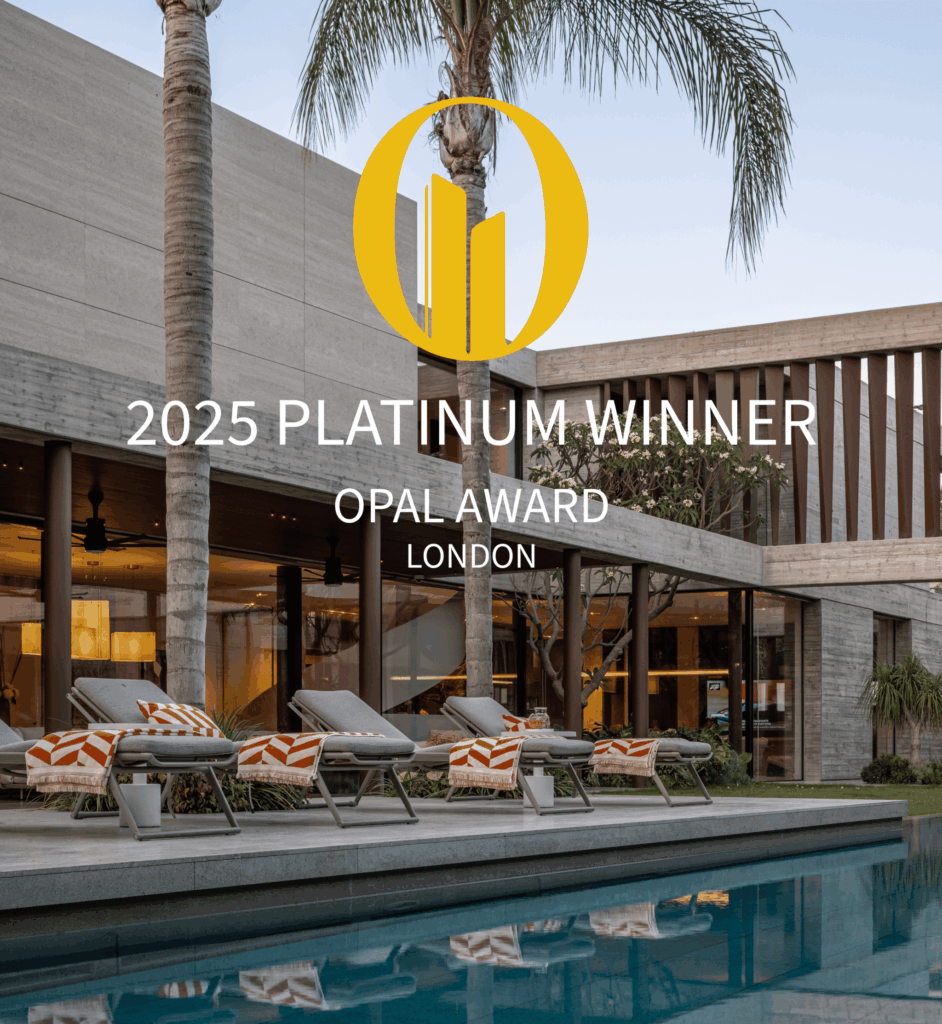
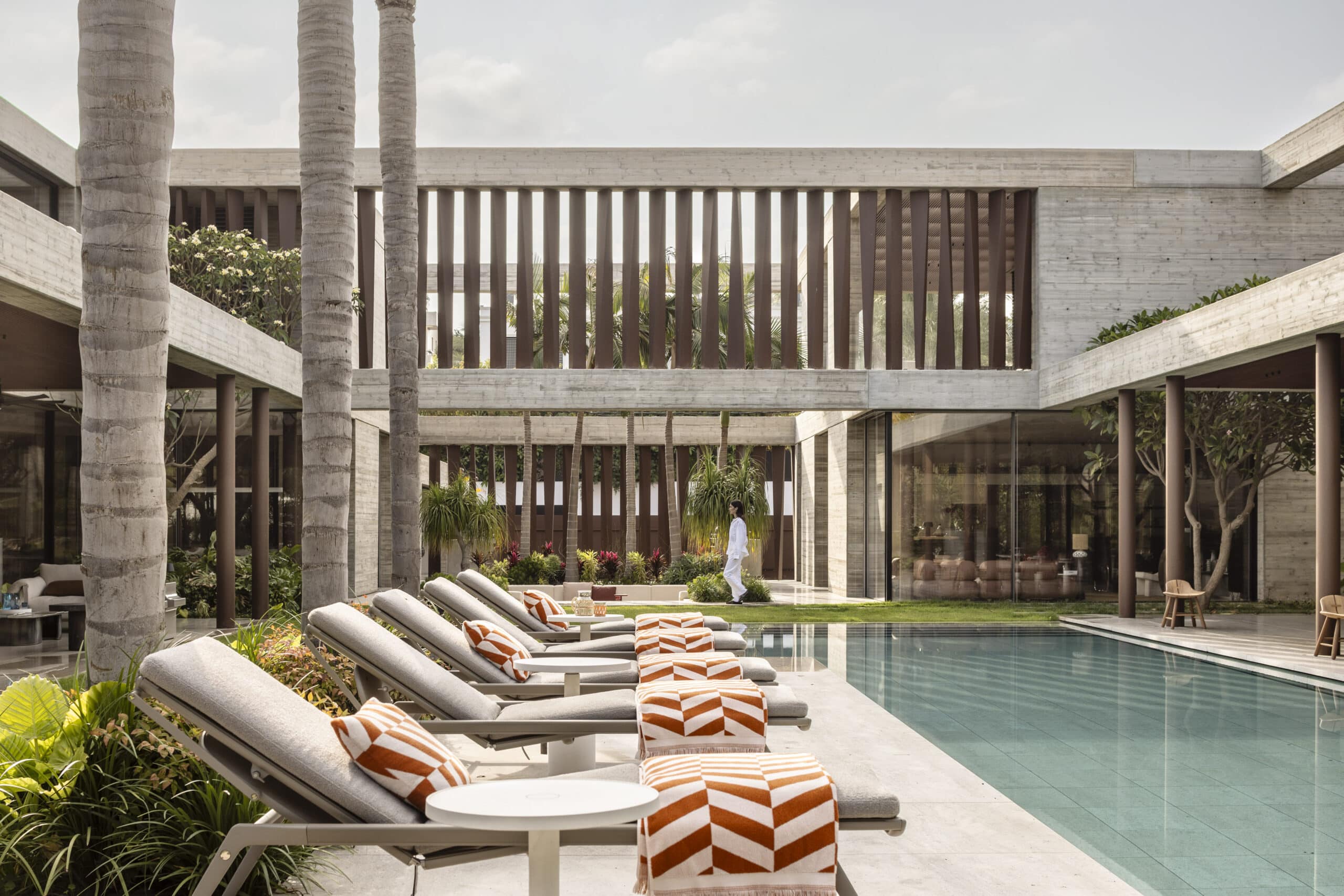
Oberson Architects has completed Resort Villa (temporary name), a dual-structured family home designed to bring the atmosphere of a luxury retreat into daily living. Set on two adjoining one-dunam plots, the project unites the land into a single cohesive composition. Rather than separating the properties, the architects created a pair of interconnected houses that frame a central courtyard, with the outdoor pool and terraces acting as the focal point of the design.
“The intention was to create a continuous living experience that feels like a resort, yet functions as a family home,” explains studio founder, Architect Dana Oberson. “Every layer was designed to reflect openness, presence, and connection.”
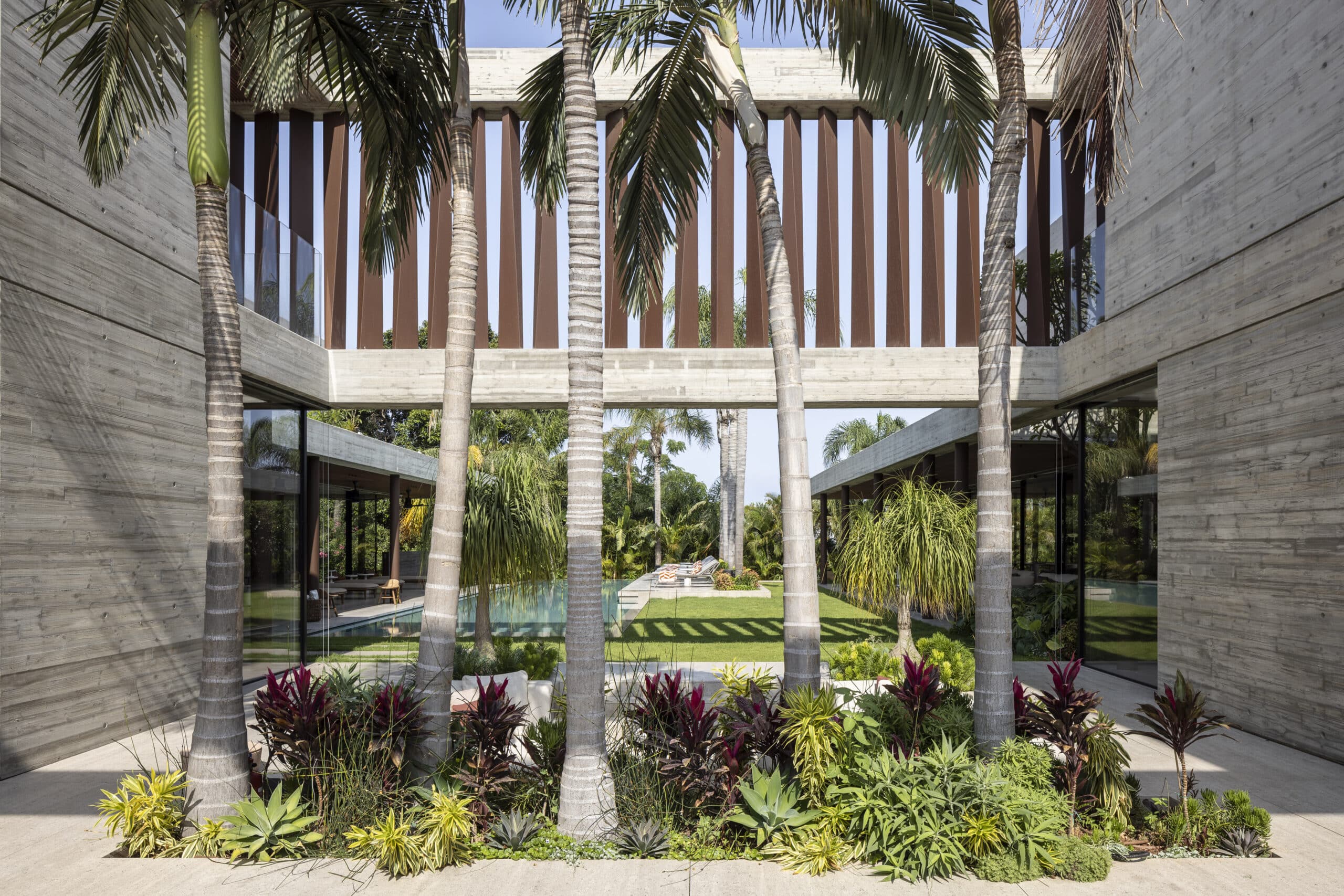
Instead of approaching the two plots as distinct units, the design treats them as part of a seamless flow. Two independent volumes are linked by a generous open-sky patio and bespoke Corten louvers that mark a wide threshold. This defining architectural layout frames the courtyard as the true heart of the home, seamlessly connecting the main residence with the children’s wing and drawing the eye toward the pool and lush terraces beyond.
The architectural outcome is a spatial composition that fosters movement and interaction, reflecting a relaxed ambiance characteristic of a resort environment. “One of the primary client requests was for the house to be a resort.”
The house is structured around long, intentional sightlines and carefully framed focal points, reinforcing its architectural language of openness and transparency.
Photography: Amit Geron
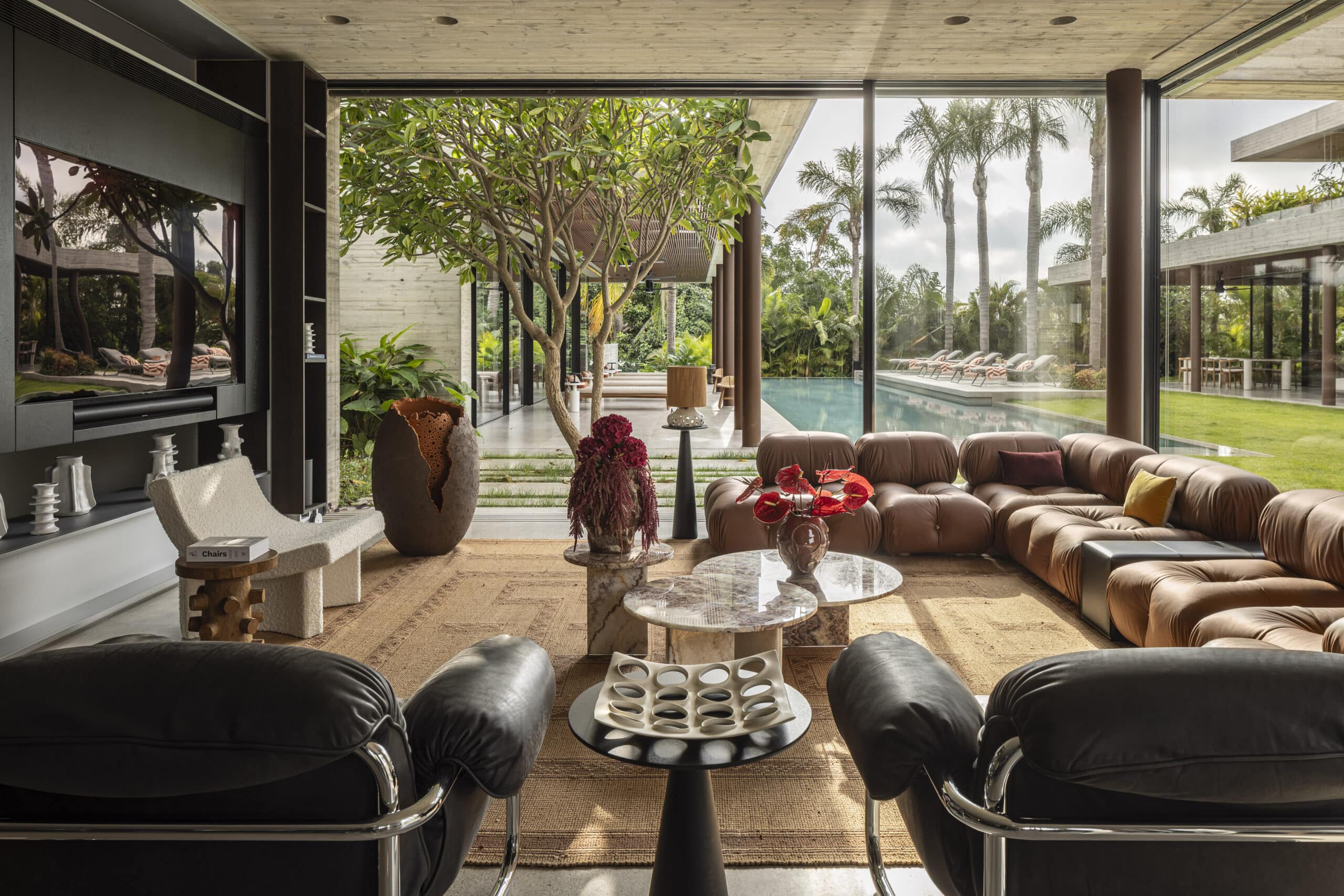
From every point in the villa, long sightlines create a sense of connection. The architecture avoids barriers, instead inviting the eye to travel across the courtyard, through the glass walls, and out toward the surrounding gardens. Pergolas stretch across the central courtyard, softening the home’s geometric lines.
At the center, the swimming pool functions as a visual anchor. Its overflow extends into the lower terraces, establishing a direct spatial connection between the two structures. The landscaping is conceived as an integral component of architectural design, with vegetation, stone, and water incorporated as primary elements that structure and define the daily experience of the house.
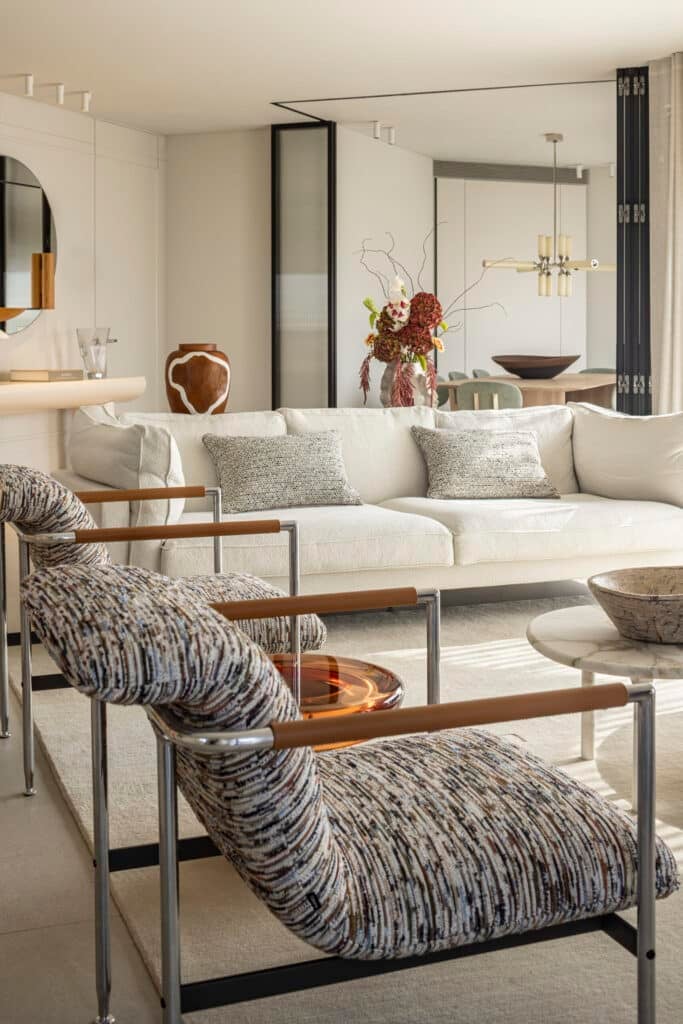
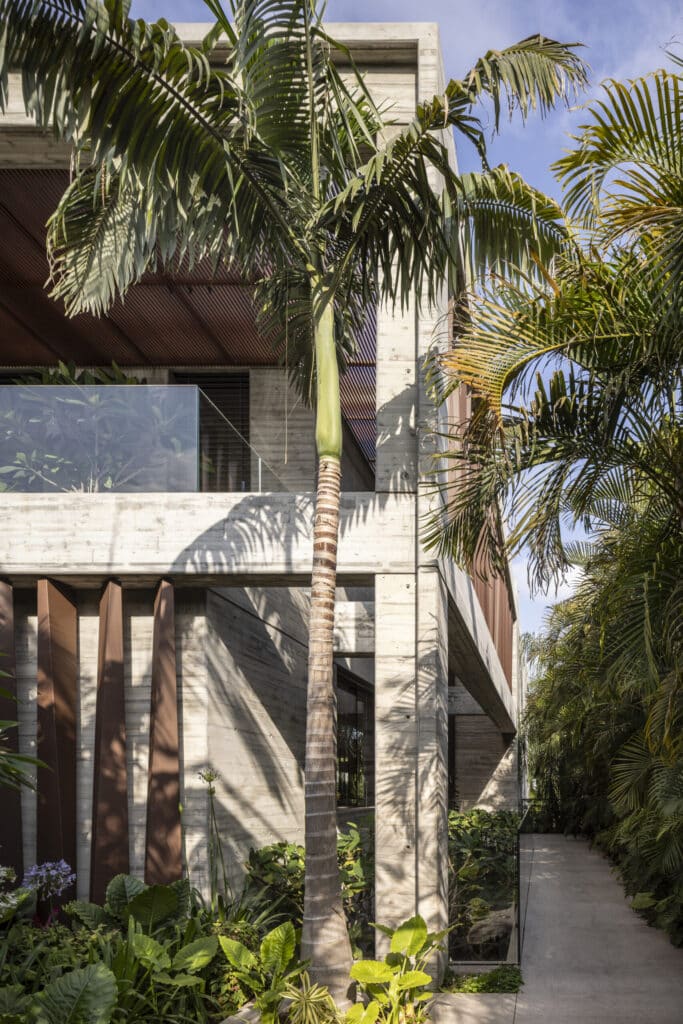
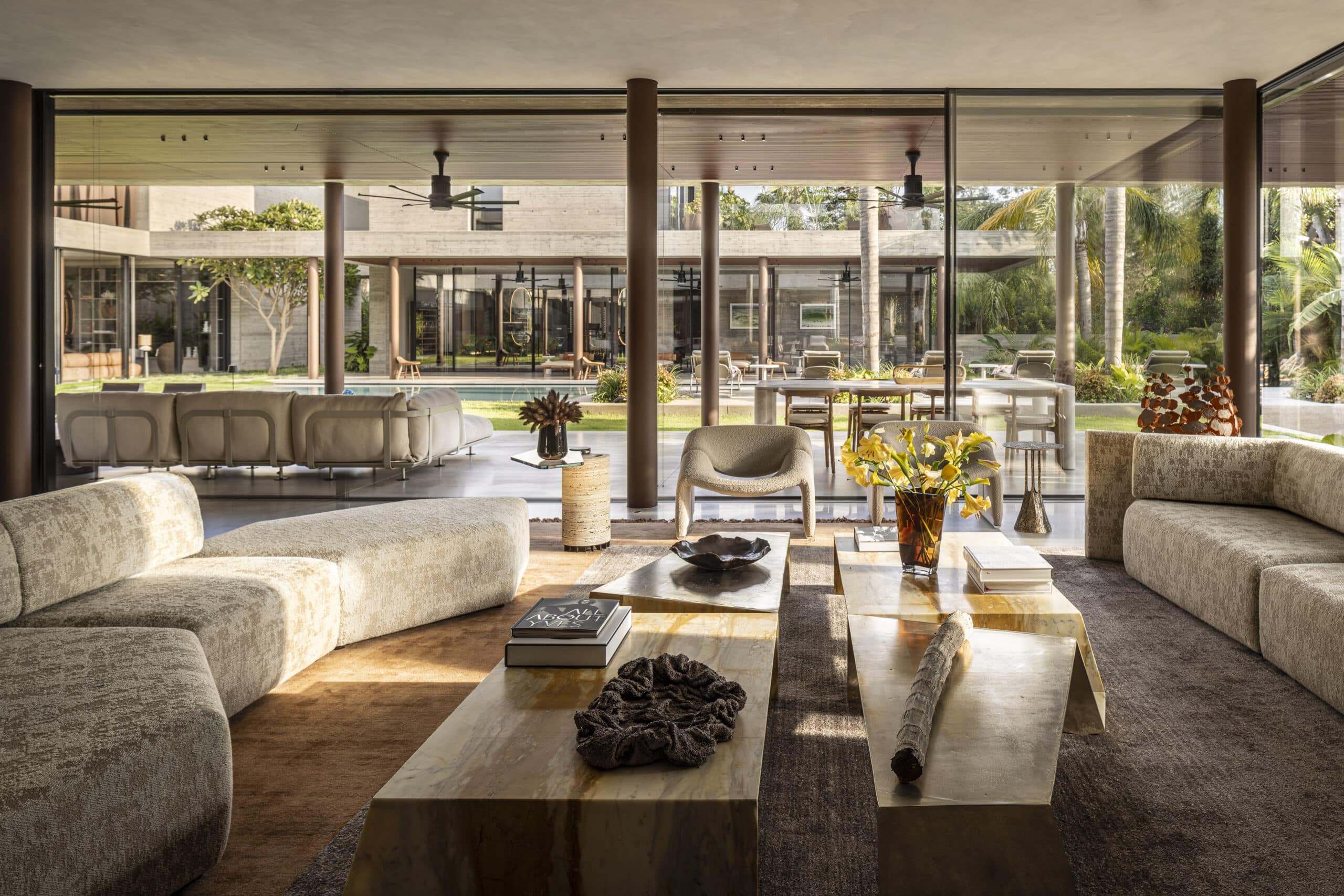
Materiality plays a central role in defining the villa’s spatial and atmospheric qualities. The palette integrates exposed concrete, Corten steel, sandy limestone, travertine, and custom metal detailing, establishing a balance between structural robustness and tactile warmth. Interiors are refined yet grounded, enriched with high-end Italian finishes.
Photography: Amit Geron
"“The house is conceived to emphasize spatial continuity and visual connection,” Oberson notes. “It has a constant sense of presence and interaction, much like the collective atmosphere of a resort, while incorporating intimate and private spaces.”"
The main house hosts the kitchen, family room, and living areas, alongside a master suite with a spacious double-height walk-in wardrobe and bedrooms for the younger children. The secondary structure is conceived as a private retreat for the grown-up children and guests, with dedicated spaces for leisure and wellness including a hammam-inspired spa, a “man cave” lounge and a fully equipped gym.
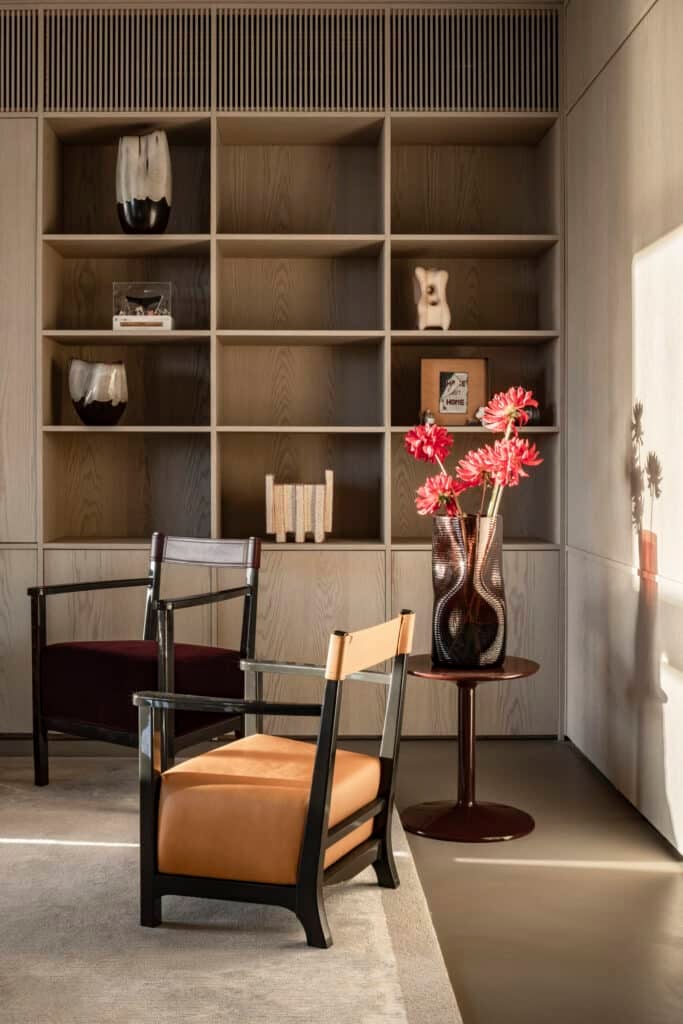
The parents’ residence is composed of a natural and muted palette, featuring sandy limewash walls, dark driftwood, and a variety of metals including Corten steel and bronze, complemented by custom-made furniture. Slim travertine sliding doors mounted on a metal mesh separate the elevator service area and the study, while maintaining a fluid connection to the living room and kitchen.
The kitchen uses natural materials such as Taj Mahal stone, wood, and a mix of stainless steel and brass, creating a direct link to the family room and parking entrance. The master suite, with its large terrace, continues this natural material scheme, while the spa area is fully clad in horizontal brown travertine, accented with metals and dark wood. The flooring throughout the private spaces of the house is a dark-toned parquet that harmonizes with the copper and Corten steel louvers.
In the children’s wing, the overall design takes on a fresher, more youthful character. The material palette incorporates bold contrasts of black stainless steel and natural wood, bringing energy and a dynamic quality to the youthful living spaces. The use of black adds a lively atmosphere that connects the children’s rooms to the wellness area and basketball court. This part of the home is defined by a strong palette of burgundy, black, and white, giving it a distinct identity within the overall design.
Photography: Amit Geron
At its lowest level, a basketball court is integrated into the plan, making use of the topography and surrounded by rich greenery. The lower-level spaces are filled with daylight and views of greenery, ensuring that even they maintain the villa’s sense of openness and immersion in the landscape. “There is no sense of being underground,” Oberson explains. “The garden literally seeps into every corner, contributing to the feeling of being immersed in a lush environment.”
For the clients, the house provides more than physical comfort and aesthetic value. It is designed to gradually reveal its spatial organization, offering fluid and light-filled interiors that maintain a strong connection to the surrounding landscape. The result is a domestic environment that delivers the qualities of retreat and serenity within the framework of everyday living.
Oberson reflects that the success of the project lies in the seamless interplay between architecture and daily living, creating a home that delivers both refuge and connection.